

For a long time, sustainability reporting rested on voluntary commitments and carefully crafted narratives. As regulation matured and public pressure intensified, the need for credible, independently verified information became unavoidable. At the centre of that shift: ISO/IEC 17029, the global framework that structures competence, impartiality and consistency for bodies performing validation and verification of sustainability information.
For most SMEs — and even many executive teams — ISO 17029 appears only indirectly, when a verification body validates a carbon footprint or a statement. Yet this standard structures the integrity of global sustainability assurance: how verifiers operate, how auditors are qualified, how impartiality is protected, how evidence is assessed. It is the invisible quality system behind the credibility of ESG claims.
Verification bodies carry operational responsibility; accreditation bodies carry strategic responsibility. And today, the latter are entering one of the most complex periods in their history: new schemes, new regulations, new competences, new risks and unprecedented public sensitivity are transforming their role from quality gatekeepers into governance actors of the sustainability landscape.
The essence of ISO 17029: a standard for trust, not bureaucracy
ISO 17029 sets universal rules to guarantee independence, technical competence, robust decision processes and reliable methodologies. It aims to create a coherent global architecture of trust, grounded in evidence-based activity: every claim must be traceable, every conclusion supported, every verifier competent, every decision protected from commercial or external influence.
In theory, that is clear. In practice, the rise of sustainability reporting has turned these principles into a daily battlefield. ISO 17029 provides the skeleton; the muscle comes from sector schemes — ISO 14064-3, CORSIA, EU ETS, MARPOL MRV, RefuelEU, CBAM, SAF, ecolabelling, CSRD claims…
2025–2026: a new world without a map
Accreditation bodies long mastered “classic” conformity assessment: management systems, product certification, laboratories. Those domains evolve slowly. Sustainability validation and verification under ISO 17029 does not.
The landscape looks like a moving puzzle: accredit verifiers across dozens of schemes with distinct technical requirements; track competences from GHG to aviation, maritime and supply chains; assess impartiality in markets under intense commercial pressure — all under timelines regulators and companies cannot wait for.
The pace changed. Expectations changed. Risks changed. ISO 17029 itself remained stable. Hence a growing gap: accreditors must interpret 17029 in contexts it was not originally designed for.
Scheme explosion: an unforeseen challenge
From 2021 to 2025, the number of validation/verification schemes referencing ISO 17029 exploded: renewable fuels, plastic credits, ESG claims, carbon removals, digital product passports, supplier due diligence, environmental footprint, CSRD reporting…
Accreditation bodies suddenly need to:
- cover a very wide technical spectrum;
- continuously update assessor competences;
- create new competence criteria;
- harmonise very different scheme requirements;
- ensure consistency across national interpretations.
They sometimes have to decide while scheme owners publish incomplete rules — or evolve faster than teams can be trained.
The competence dilemma
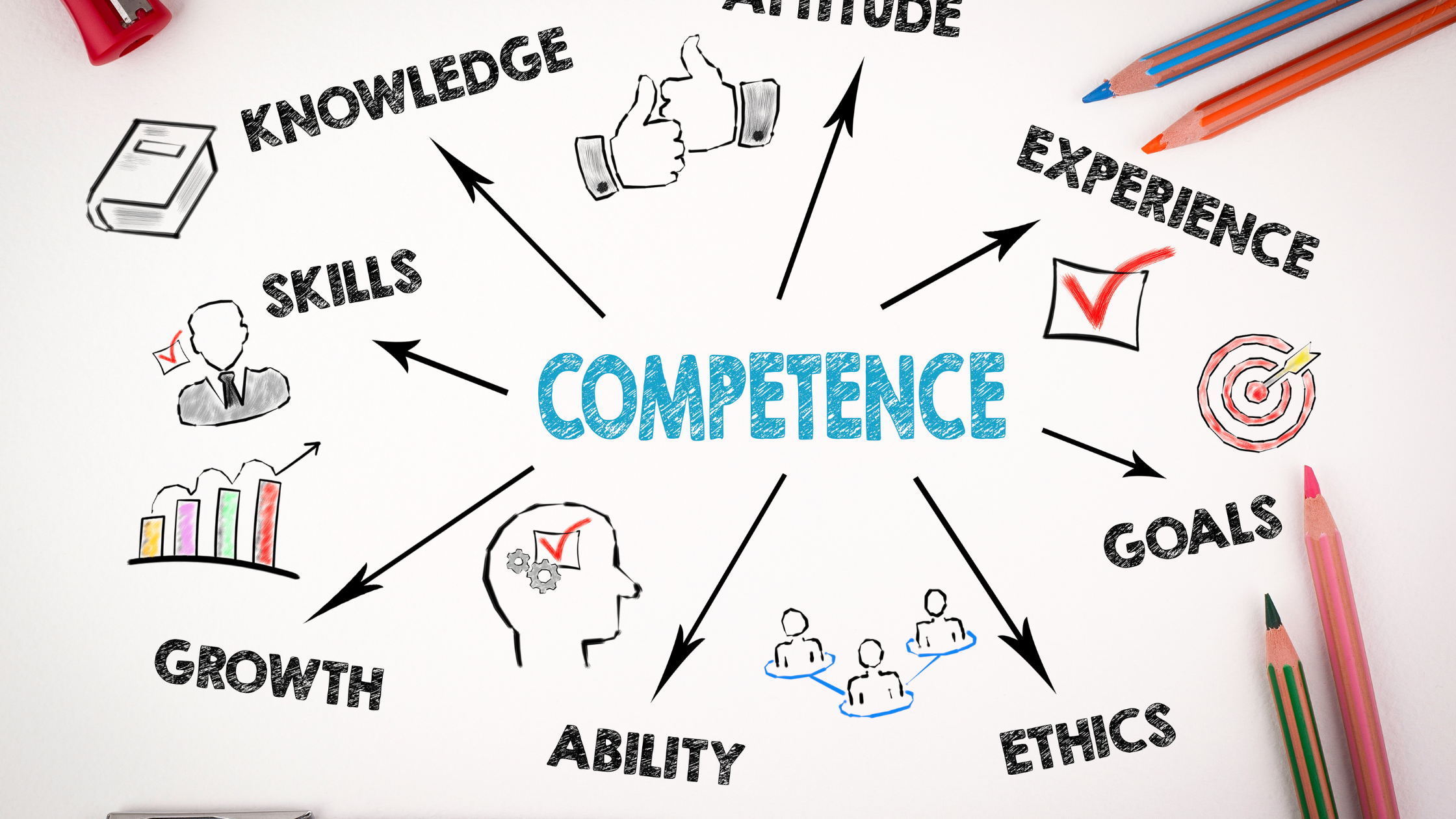
Competence is the backbone of ISO 17029. But what does it mean when a body must assess carbon capture one week and supply-chain due diligence the next? Accreditors define criteria in domains they are still discovering, must prevent assignment of unqualified staff under commercial pressure, and judge fairly on a technical basis.
Impartiality under pressure
The sustainability market is booming. Clients want fast, cheap verification. Competition is fierce. Accreditation bodies must protect impartiality more than ever: detect conflicts of interest, assess impartiality-committee maturity, verify that decisions stay independent of commercial pressure. Impartiality rests on culture, not procedures alone — and culture is not audited with a checklist.
Documentation vs reality
A classic under ISO 17029: good practice but weak documentation, or perfect documentation but fragile practice. With multiplying schemes and document templates, some bodies drown in paperwork; others operate effectively but struggle to formalise their reasoning for the assessor.
Accreditors must ask: does the organisation follow its own system? Does that system reflect ISO 17029? Does it match what happens in the field?
What comes next: smarter, more integrated accreditation
The next three years will redefine the role of accreditation bodies: stronger technical partnerships, cross-cutting understanding of sustainability systems, dynamic competence-assessment frameworks, deeper ESG and governance capability, and disciplined use of technology to strengthen — not replace — expert judgement.
ISO 17029 provided the structure. The sustainability world imposed the challenge. Accreditation bodies stand at the intersection: guardians of trust in a world that demands more of it than ever.
Eco Fluent Solutions supports exactly this moment: strengthening verification-body systems, reducing inconsistencies on the accreditation side, and securing the transition from voluntary claims to sustainability information assured with rigour and clarity.
The future of sustainability is not only about reporting. It is about credibility. And credibility rests on systems built on ISO 17029 — and on the accreditation bodies that uphold them.
Support for verification bodies: explore our ISO 17029 & ISO 14065 support.